Cambodia Nature Pictures
Cambodia’s natural landscape has been shaped as much by politics and economics as by ecology. Nearly half the country remains under forest cover, though satellite analysis shows steady losses along its borders with Vietnam and Thailand, where agricultural concessions and illegal logging persist. The government has declared more than 7 million hectares as protected areas, on paper among the largest such systems in Southeast Asia. Enforcement, however, remains uneven.
The country’s ecosystems are unusually diverse for its size. The flooded forests around Tonle Sap form one of the world’s most productive freshwater fisheries, sustaining millions of Cambodians and regulating floods along the Mekong Basin. The Cardamom Mountains, in the southwest, harbor cloud forests, elephants, and one of the last viable populations of Indochinese tigers, though few have been sighted in recent years. To the north, the dry dipterocarp woodlands of Preah Vihear and Mondulkiri support banteng, giant ibis, and other species now rare elsewhere.
Economic pressures continue to test these environments. Hydropower projects on the Mekong and its tributaries have altered fish migration and sediment flow, with long-term implications for both biodiversity and food security. Expanding rubber and cassava plantations have replaced large tracts of forest, while sand mining and road construction fragment remaining habitats.
Yet some experiments in conservation are showing results. Community forestry initiatives have given local groups limited management rights over forest lands. NGOs working with government agencies have restored sections of the Cardamoms and reintroduced species once thought extirpated. Ecotourism, though modest in scale, has provided income to some communities near protected areas.
Cambodia’s future balance between growth and conservation will likely depend less on new declarations than on consistent enforcement and credible land governance—areas where progress has been slower than the country’s economic rise.
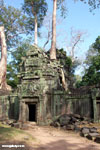
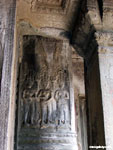
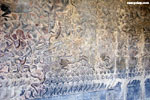
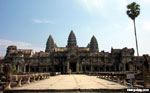
Below is a collection of photos taken in Cambodia. Except where noted, pictures were taken by Rhett A. Butler
 , copyright Mongabay.com 1999-2015. While these images are the property of mongabay.com, it may be permissible to use them for non-commercial purposes (like powerpoint presentations and school projects), provided that the images are not altered in any form. Please read this for more details. If you are interested in using an image in a publication please contact me.
index | topics index | environmental news | newsletter